Technical specifications are crucial when selecting fabric for upholstery, curtains, cushions, or décor in your home. Terms such as GSM, Martindale, and fabric construction help you identify how strong, durable, and suitable a fabric is for a particular purpose. However, most purchasers just neglect such information and select fabrics solely on the color or pattern basis.
In this comprehensive guide, we will break down the most important fabric specifications you need to know and how they relate to fabric performance. Whether you are a retailer, designer, or even homeowner, this article will help you make confident and smart choices with regard to fabric decisions.
What is GSM in Fabric?
GSM is one of the most important specifications of any fabric; it provides information about the weight and the density of that particular material. With higher GSM, the fabric is sure to be thick, strong, and resilient. Low GSM fabrics are lighter and softer.
Why GSM Matters:
- The fabric thickness can be shown with the help of this.
- Indicates the durability of the fabric.
- Helps in choosing the right fabric for the right use.
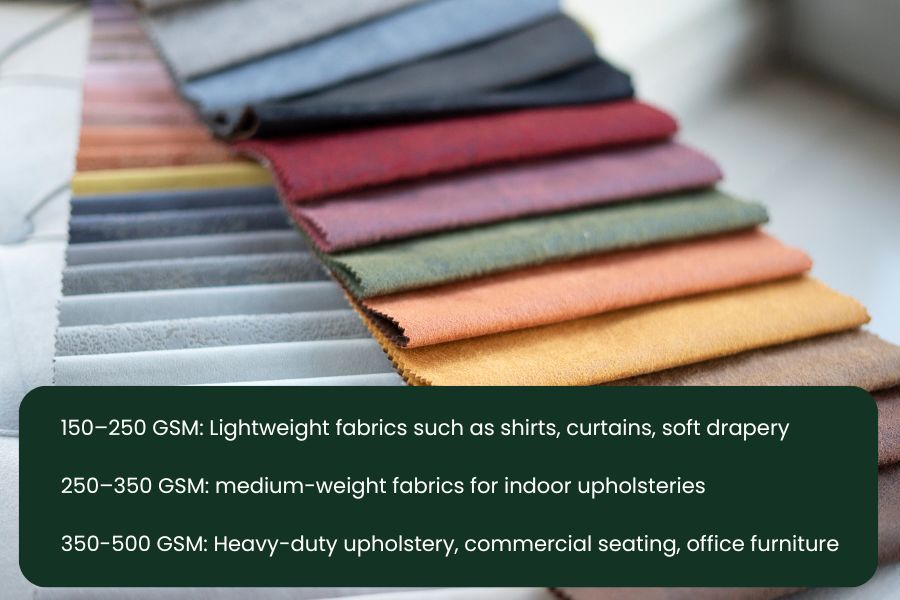
Common GSM Ranges:
- 150–250 GSM: Lightweight fabrics such as shirts, curtains, soft drapery.
- 250–350 GSM: medium-weight fabrics for indoor fabric use.
- 350-500 GSM: Heavy-duty upholstery, commercial seating, office furniture.
The best GSM for premium upholstery would be anything from 300–400, as it allows just enough strength and comfort.
What is the Martindale Rating?
The Martindale test determines the abrasion resistance of a fabric-or the amount of wear and tear a fabric can withstand before showing damage. The test works by rubbing the fabric in circular motions until it breaks down. Results are given in cycles.
Understanding Martindale Levels:
- 10,000–15,000 cycles: Light residential use
- 15,000–25,000 cycles: Average household use
- 25,000–40,000 cycles: Heavy domestic use (sofas, living room furniture)
- 40,000–50,000 cycles: Commercial use – restaurants, offices, lounges
- 50,000 cycles: High-performance and industrial-grade fabric
For the sofas and high-traffic furniture, you should look for 40,000 to 50,000 Martindale for long-lasting durability.

Fabric Construction: The Backbone of Quality
Fabric construction includes:
- Fiber type: Polyester, Cotton, Linen, Blends
- Weave style: Plain, Twill, Jacquard, Dobby
- Yarn thickness
- Finishing treatments
Construction determines the strength, feel, texture, and look of the fabric. For example:
- 100% Polyester upholstery fabrics combine excellent durability with great resistance to stains.
- Cotton blends are breathable and very soft, hence suitable for home furnishings.
- Weaves from Jacquard give a rich, luxurious texture suitable for premium interior purposes.
Understanding construction helps you choose fabrics that satisfy both your performance and aesthetic needs.
Fabric Width: A Key Factor for Tailoring & Upholstery
Fabric width denotes the width of a fabric when it is unrolled. Normal widths of upholstery fabrics are approximately 137 cm to 150 cm.
Why Width Matters:
- Reduces wastage while tailoring.
- Helps to estimate the right yardage.
- Provides seamless upholstery.
- Ideal for large furniture & curtain panels
The wider fabrics are normally cheaper and also provide a neater finish when stitching.

Other Important Fabric Specifications
1. Color Fastness
Colourfast properties: Colour properties after washing or exposure to sunlight. The higher the colour fastness, the longer-lasting the color.
2. Pilling Resistance
It shows whether the fabric will ‘pill’ or develop small balls on the surface. This is important when choosing fabrics for sofas and high-use furniture.
3. Tear Strength
Measures how much force it takes to make a fabric tear.
4. Wyzenbeek Test
Another abrasion test, similar to Martindale, but commonly used in the US.

How Fabric Specs Help You Make the Right Choice
When you understand GSM, Martindale, and construction, you will be able to choose your fabrics based on real performance – not just looks.
For Example:
- A living-room sofa requires 350 GSM and 40,000+ Martindale.
- Curtains require only 200–250 GSM with high color fastness.
- Restaurant upholstery needs 50,000+ Martindale for heavy usage.
Choosing the right specifications thus offers savings in money, durability of the fabric, and adds a touch of class to your home or venture.
Final Thoughts
Fabric specification is a lot more than a set of technical terms; it’s the backbone of quality. By understanding GSM, Martindale, and other key specifications, you will be assured that the fabric you have chosen will be sufficiently durable, comfortable, and just right for its purpose. Such knowledge takes one toward wiser buying decisions as a homeowner or retailer, thus avoiding many costly mistakes.